about

Lucian Laufkötter is a Munich-based artist. For him, making art is a way of turning thoughts and feelings into something physical – an object made by hand.
The creative process can unfold very differently from one work to the next. Sometimes a painting begins with a clear idea that is carried through from start to finish. In other cases, the initial idea changes completely during the process and develops into something entirely different. At other times, he starts with little more than an impulse and works spontaneously, allowing decisions to emerge through the process itself.
His interest in visual art began early. In primary school, one of his works was enlarged to around three metres in height and painted on the school’s exterior wall. Later, while at secondary school, his design for a public stele in Tübingen was selected from several submissions and realised in public space.
He later studied Rhetoric and completed a Master’s degree. During his Bachelor’s studies, he also studied Art History as a minor. While his interest in art remained, making art himself receded into the background for several years. In 2025, he returned to painting with renewed focus and began developing figures, an ongoing series that now forms the core of his artistic work.
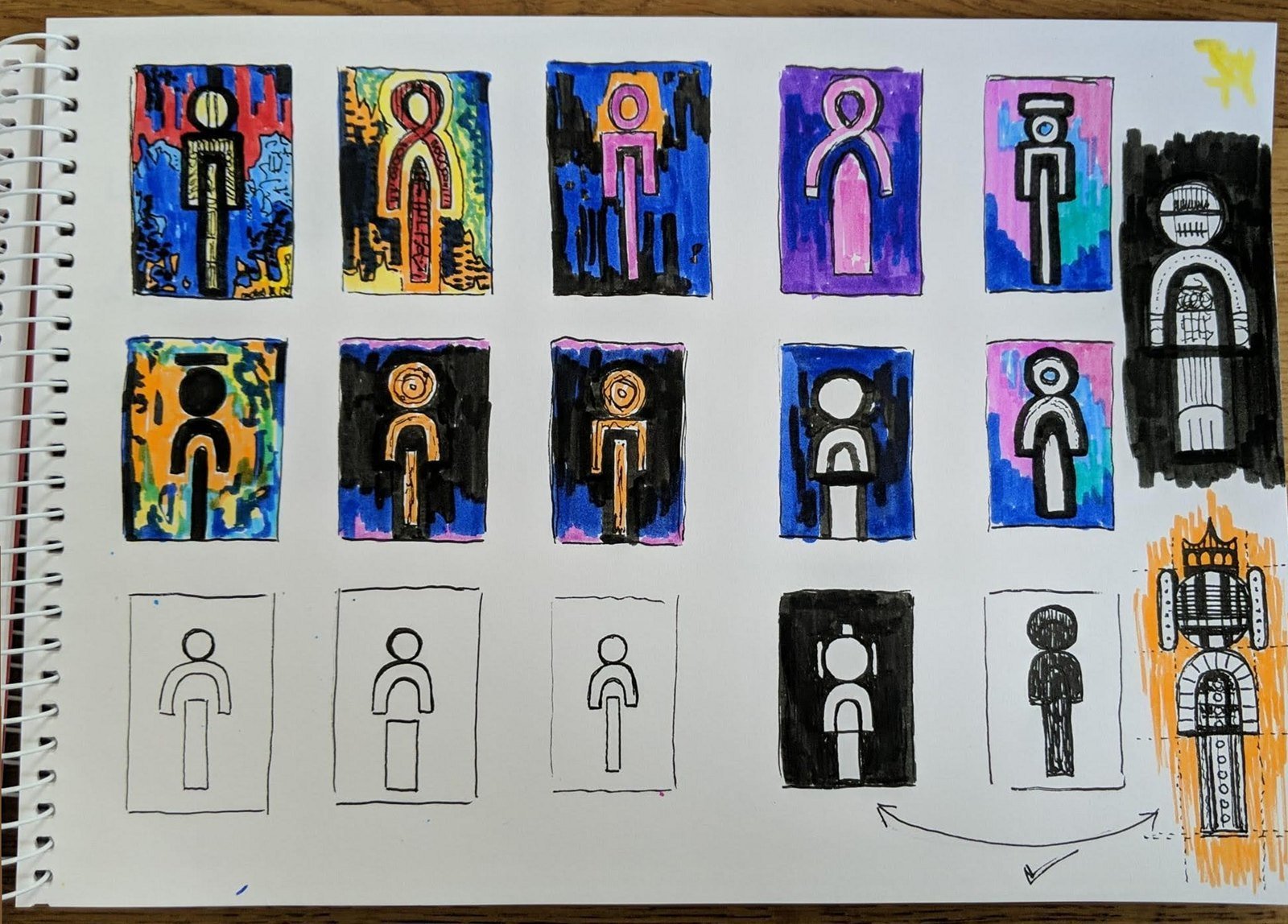
Unlike many other artists, he does not want to commit himself to a single style or way of painting. At the same time, he felt there should be something that would make his work recognisable despite this variety and allow him to explore his ideas and interests through his art. This led to the development of the figure: a three-part form consisting of head, torso and legs that symbolically represents the human being in a highly abstract way.
While he moves freely between techniques, materials, colours and different ways of painting, the figure remains a constant throughout his work.
Lucian Laufkötter is particularly interested in the relationship between the inner and outer worlds of humans: how differently we perceive the world depending on personality, memory, experience and emotional state, and how our surroundings influence us while we, in turn, influence the world around us. These themes feed into the process of creating the paintings and are explored throughout the figures-series.
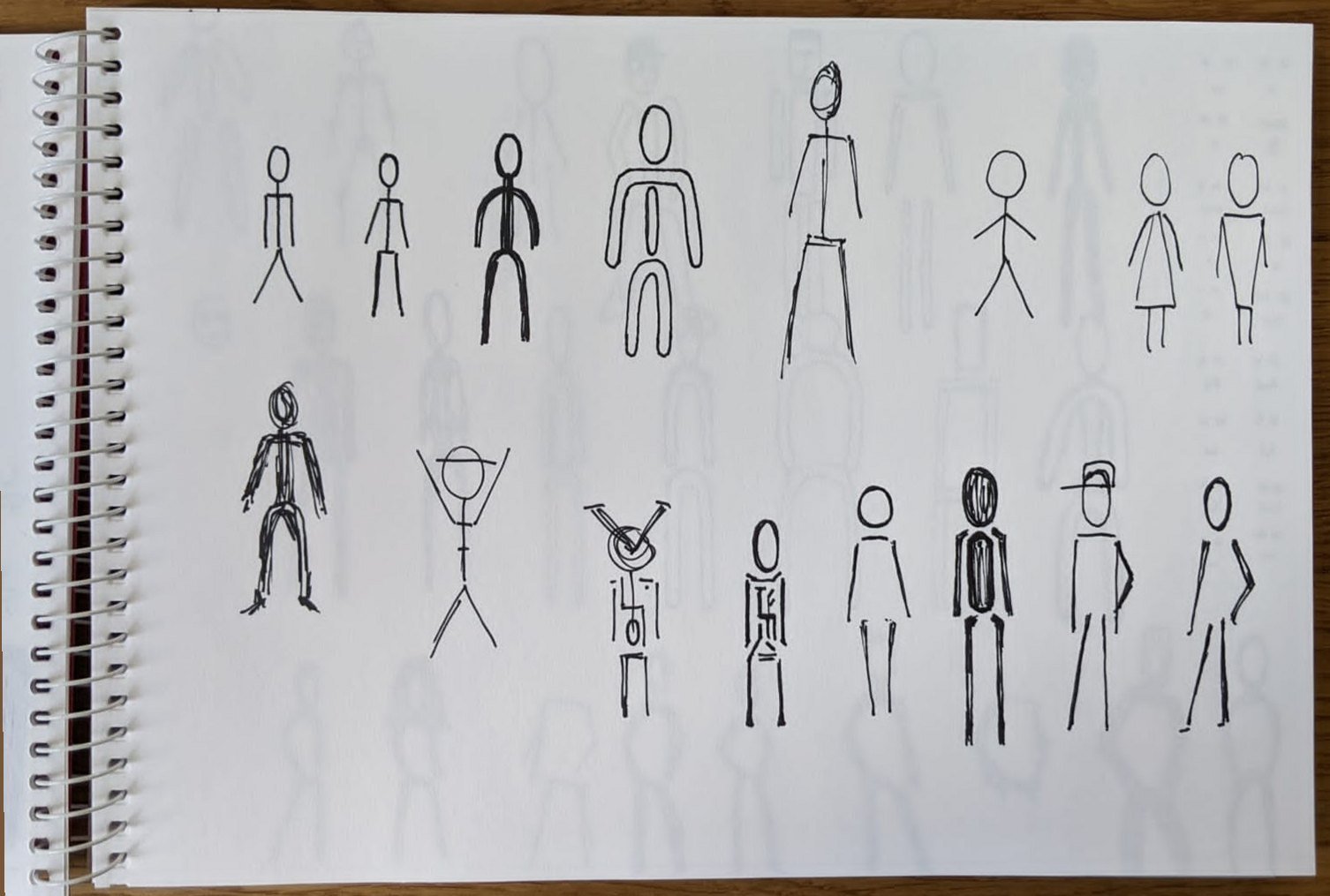
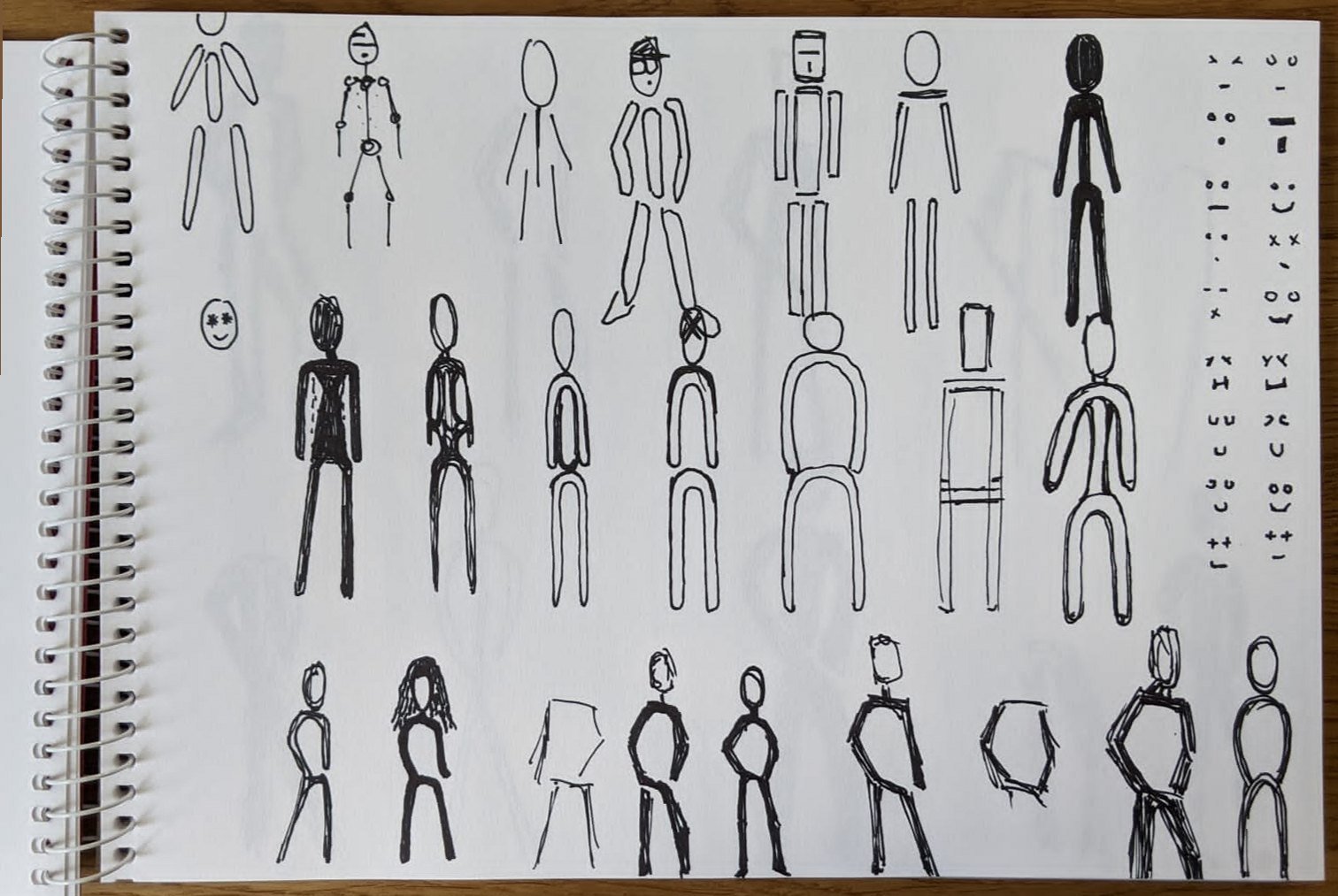
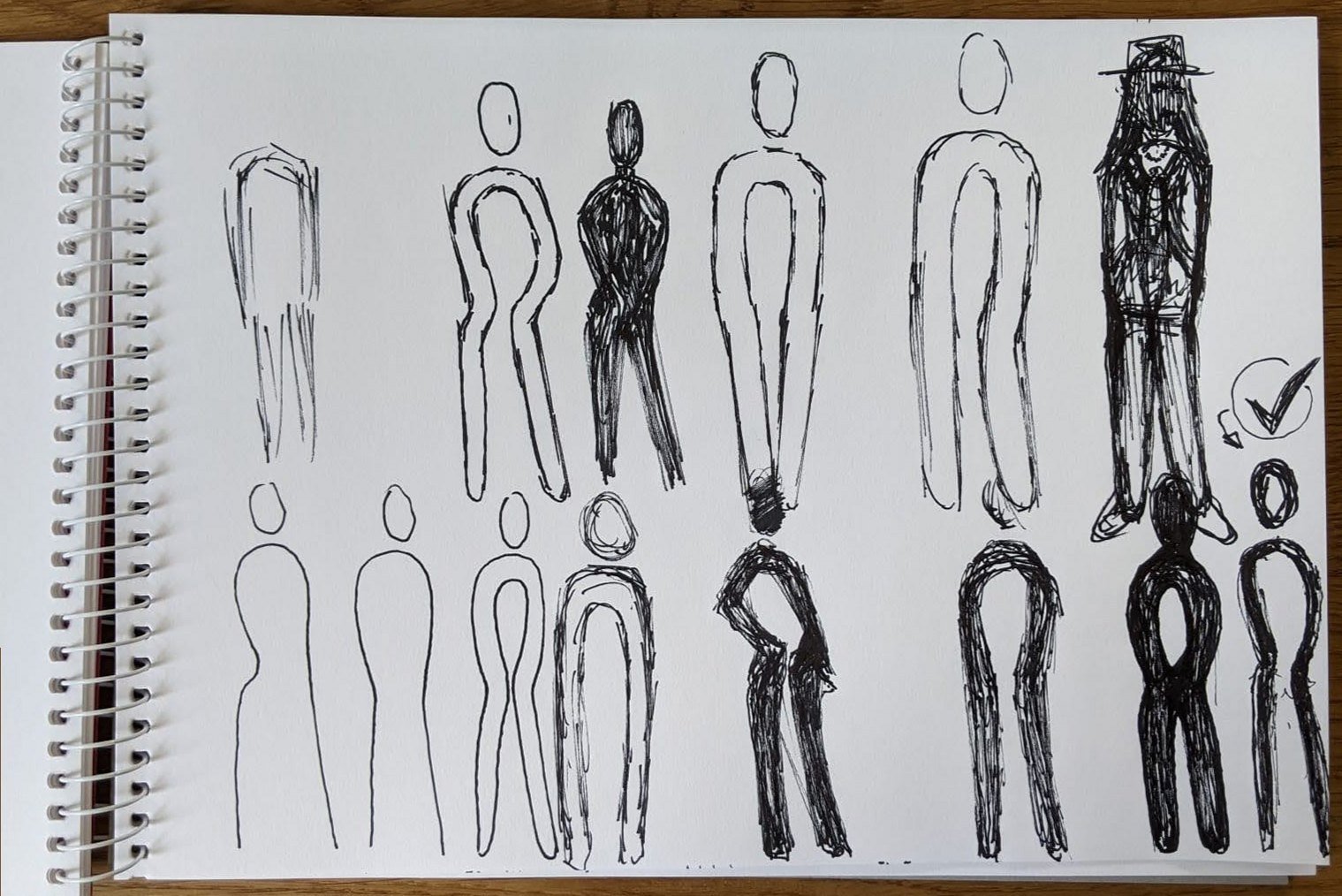
the origin of the figures-series
He set out to reduce the human figure to its essence: no facial expression, neither male nor female, no particular pose. What remains is a simple three-part structure – a round head, a torso and legs.